
The study called for stronger coordination between civilian hospitals, emergency services, and military authorities to improve the flow of operational information.
By Pesach Benson, TPS
A new study of a hospital in southern Israel’s response to Hamas’ October 7, 2023, attack found that years of disaster training helped medical teams continue treating casualties while rockets were falling nearby, while also revealing challenges in communications, staffing, and casualty distribution that could inform hospitals preparing for future conflicts.
Hospitals around the world are increasingly preparing for the possibility of prolonged conflicts and large-scale emergencies.
The study’s findings offer practical guidance on strengthening hospital resilience, from improving communication and staffing plans to ensuring medical systems can continue operating when the crisis extends beyond the emergency department.
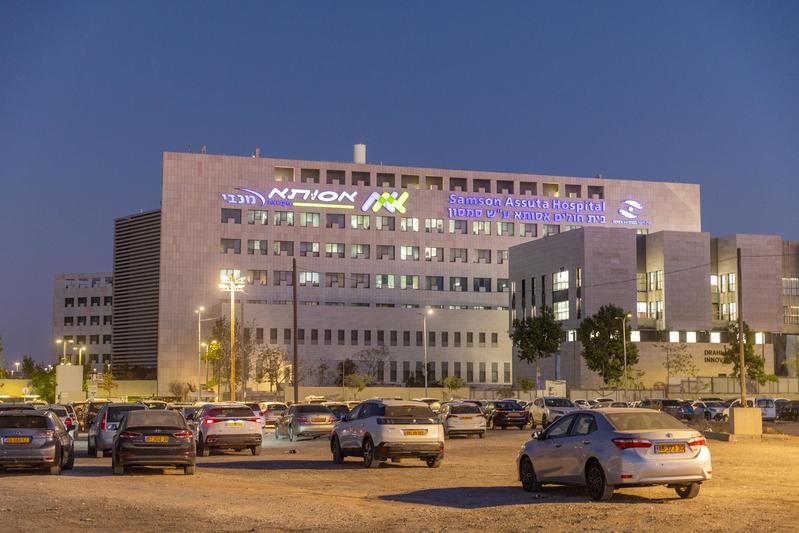
The study — published in the peer-reviewed Disaster Medicine and Public Health Preparedness — analyzed the experiences of 19 staff members from the emergency department at Assuta Ashdod Medical Center, a civilian hospital in southern Israel and one of the first hospitals in the region to receive casualties on the morning of October 7.
Researchers conducted in-depth interviews with physicians, nurses, and administrators who worked that day, as well as the hospital’s head of trauma and disaster management.
Led by Maximilian Nerlander, a doctoral candidate at Linköping University in Sweden and a visiting scholar at the Hebrew University of Jerusalem’s School of Public Health, the research was conducted with Prof. Adam Rose of the Hebrew University and Dr. Debra West of Assuta.
Unlike previous mass casualty incidents—such as terrorist attacks in London, Paris, or Boston—the October 7 assault evolved over many hours while communities across southern Israel remained under attack.
Ambulances struggled to reach victims, communication systems faltered, and hospitals had little reliable information about the rapidly changing situation.
Despite those conditions, Assuta Ashdod continued operating while rockets fell nearby.
Preparedness Tested Under Fire
The researchers found that one of the hospital’s greatest advantages was extensive preparation.
Regular mass casualty drills conducted before the war meant doctors, nurses, and support staff understood their responsibilities instinctively, allowing them to focus on unexpected problems rather than basic emergency procedures.
The hospital’s reinforced emergency department, designed to protect patients and staff from rocket attacks, also enabled staff to continue treating patients without interrupting care to seek shelter.
However, the interviews also revealed challenges that could not have been fully identified through drills alone and only emerged during a prolonged wartime emergency.
Some employees received simultaneous call-up orders from both the Israel Defense Forces reserve system and the hospital.
Others hesitated to report for duty because their families were also under threat.
Administrative personnel responsible for registering patients were unable to reach the hospital, creating unexpected bottlenecks, while plans to transfer less seriously injured patients out of the emergency department proved impractical because other parts of the hospital lacked rocket protection.
Researchers identified limited situational awareness as another major challenge.
Staff frequently lacked reliable official information about events unfolding outside the hospital, forcing them to piece together fragmented reports from soldiers, paramedics, patients, and even social media in order to anticipate the next wave of casualties.
The study found that while some Israeli hospitals received casualty numbers that strained their capacity that day, Assuta Ashdod believed it had the ability to treat significantly more patients.
Preparing for Future Conflicts
Based on those findings, the researchers said hospitals should rethink disaster planning to account for prolonged armed conflicts rather than isolated mass casualty incidents.
They recommended conducting more realistic drills that simulate repeated waves of casualties, communications failures, and staffing shortages while testing logistical challenges such as moving patients through hospitals functioning during active attacks.
The study also called for stronger coordination between civilian hospitals, emergency services, and military authorities to improve the flow of operational information.
Researchers further urged health systems to develop contingency plans for staffing shortages and regional casualty management.
Recommended measures include securing transportation for healthcare workers during active conflict, cross-training personnel to perform critical administrative functions, and creating mechanisms to distribute patients among hospitals according to available capacity.
West, who led Assuta Ashdod’s emergency department response on October 7, said the experience demonstrated how modern warfare can affect every aspect of hospital operations.
“Unlike a conventional mass casualty event, a mass casualty event under fire disrupts every aspect of hospital operations, from patient flow and emergency department evacuation to staffing and the ability of personnel to work while their families are under threat,” she said.
“These experiences offer lessons beyond clinical care for hospitals preparing for disasters in which the healthcare system itself becomes part of the crisis.”
Nerlander said recent conflicts demonstrate that hospitals worldwide must prepare for prolonged warfare rather than isolated disasters.
“It is becoming increasingly evident that at some point in the future, other parts of the world will face the same type of high-intensity asymmetric warfare as Israel did on October 7,” he said.
“My hope with this study is that the tragedy of that day can be converted into knowledge that can save lives and avert suffering in the future, wherever it occurs.”