
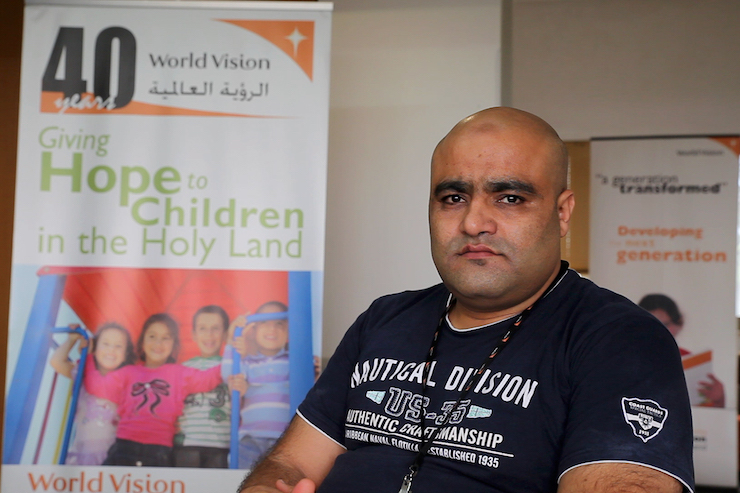
El-Halabi was released in February 2025 as part of an Israel-Hamas hostage and prisoner exchange.
By Vered Weiss, World Israel News
Newly analyzed internal Hamas documents indicate that the group coordinated around the legal case of Mohammed el-Halabi, the former Gaza director of World Vision, and took steps to obstruct his prosecution in Israel, according to an analysis published by NGO Monitor.
The documents, described as originating from Hamas’ Ministry of Interior and National Security in Gaza, include reports and committee records from 2020.
A March 2020 report refers to el-Halabi as “the detainee in Zionist prisons” and states that Hamas monitoring and coordination “had a role in thwarting multiple schemes” to secure his conviction.
El-Halabi was arrested by Israel in June 2016 and convicted in June 2022 by the Beersheba District Court on multiple terror-related charges.
The court ruled that he diverted humanitarian funds to Hamas, supplied construction materials for military infrastructure, including tunnels, procured weapons, and collected intelligence.
He was released in February 2025 as part of an Israel-Hamas hostage and prisoner exchange.
Additional Hamas records cited by NGO Monitor describe efforts to prevent potential witnesses from testifying in Israel.
A March 3, 2020 report says a World Vision Gaza security official was detained for questioning after Hamas authorities learned he might testify.
An April 2020 internal protocol concluded that World Vision employees should be barred from exiting Gaza via the Beit Hanoun crossing to hinder court proceedings.
The Israeli verdict also referenced testimony from a World Vision accountant, Mohammed Mehdi, who warned the organization that el-Halabi was transferring funds to Hamas. Mehdi was later interrogated by Hamas and dismissed.
The court said his account aligned with the operational methods described in the indictment and noted that a copy of his Hamas interrogation was found on el-Halabi’s computer.
Throughout the trial, World Vision and allied organizations rejected the allegations, citing internal audits they said found no diversion of funds.
Amnesty International described el-Halabi as a “prisoner of conscience,” while senior figures in Australia criticized the conviction. European Union and United Nations officials also raised concerns about Israel’s judicial process during the case.
NGO Monitor President Prof. Gerald M. Steinberg said the newly disclosed documents undermine those defenses, arguing they show coordinated efforts to discredit Israel’s legal proceedings. He called on governments funding aid in Gaza to impose stronger oversight and transparency requirements.